Frontline Nurses: Ebola
Maria J. Morris
Midwife
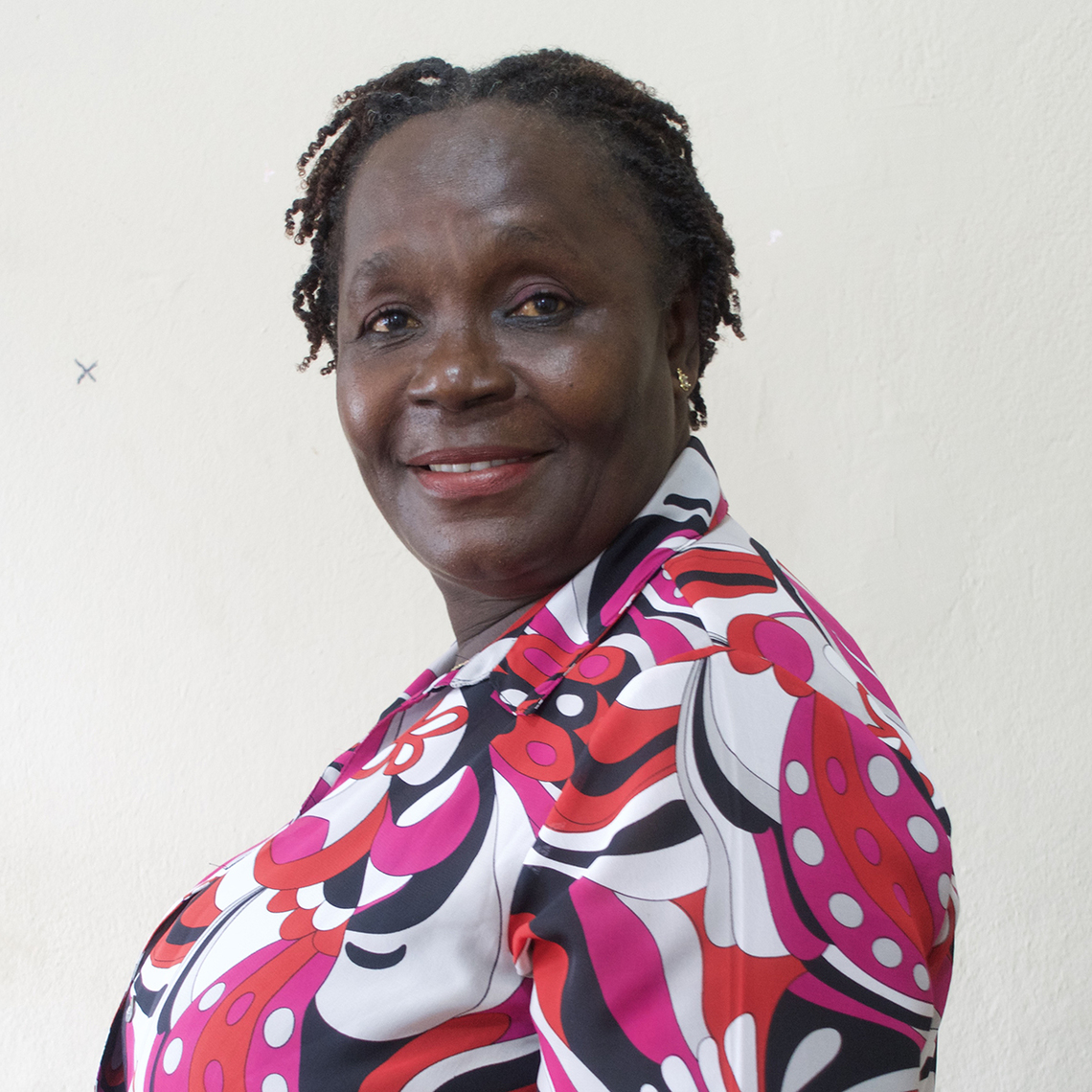
Maria J. Morris, a midwife by training, responded to a recruiting call to work as a nurse at an Ebola treatment unit, when there was a shortage of nurses who were willing to treat Ebola patients. In addition to working long hours in the unit, she conducted outreach in her community, working to encourage those exhibiting symptoms to seek help.
Q: Yes. Can you tell me when you first learned about the outbreak? When you first learned about it, where were you, what were you doing? Do you remember?
MJM: The first time I came across a patient was a pregnant woman. Well, I did not know it was Ebola. She came from the OPD [out patient department]. Her skin was very hot. When she came, because she was in labor and her skin was hot, the OPD midwives, they were in the labor room. I heard she died before I came—I came the next day, she died. She never delivered. And she died with the pregnancy. And that was my first experience.
Q: And how did you go from working in the midwifery department to the ETU?
MJM: They were recruiting nurses; they needed nurses to go up to help. So my girlfriend called to tell me that the people needed nurses to go in the ETU, and she asked me if I would be—if I would like to be there. I said, no problem. It’s teamwork. We have to save life. It could be any of my relatives, dead on that day, and I hold myself responsible, so I told her, I said, “Put my name down, I’ll go.”
Q: Psychologically, socially, who supported you to keep going?
MJM: It was my husband. He was afraid but later on he’d say, “I know you can make it, Soko.” My children. They got afraid and told me, “Mommy, don’t go there.” I said, “No, no. I went to school, I took oaths, I have to help. Somehow, some way, I should be part of this crisis. So I have to go.”
Q: What about the community, the wider community? Your neighbors, your friends?
MJM: I met the chairman of the community to tell him I should be informed if we have any patients. Because we don’t want an outbreak in the community. If anything, I will call the ambulance to carry the patient to the hospital. I went all around with a microphone, telling people not to treat any patient at home. Anybody sick, go to the hospital. And after that, the community, they—they told me thank you for what I did. So our community was safe. We have our washing-hand buckets all around the community. If I do not see the bucket, I will demand you to put a bucket there to wash your hands.
Q: I know there were a few lockdowns. You still went to work, during those lockdowns. The health workers still went home and came back to the ETU.
MJM: We had a bus to carry us to work, but when we started, there was no bus. We used to transport ourselves.
Q: If you had the opportunity to talk to the head of the World Health Organization, what would you want them to know?
MJM: I want them to know that they should pay more attention to health workers all over the world. If the health worker is well taken care of, they will work more, they will be moved. I want for the whole world to pay attention to health workers. They are not paying attention to us, seriously. They are not paying attention.
If you cannot pay your health worker well, she will not want to do well. If we continue like this, it will be too bad for us, because most of the nurses are working two, three jobs at a time. That is the only way you have money.
Maria J. Morris was interviewed for Frontline Nurses by Susan Michaels-Strasser on August 15, 2019 in Monrovia, Liberia.