Frontline Nurses: Ebola
Mawah Kamara Verdier
Registered Nurse; Treasurer, Liberian Nurses Association
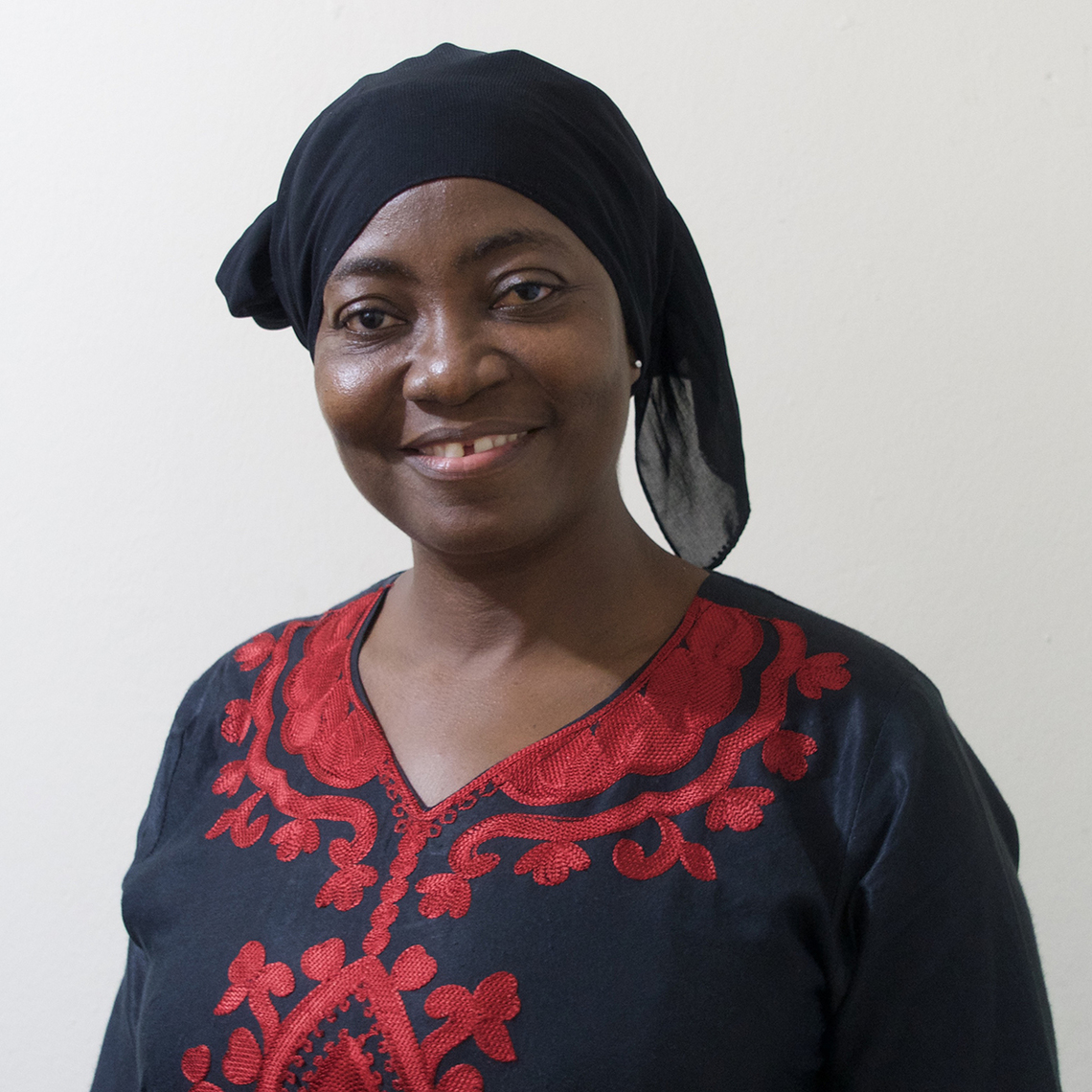
Mawah Kamara Verdier is the Treasurer for the Liberian Nurses Association. In addition to her training as a registered nurse, she holds a bachelors degree in sociology, and is pursuing a masters degree in peace and conflict studies. At the start of the Ebola epidemic, she became actively involved in educating the community, fundraising, and training nurses to work in Ebola treatment units. Verdier also joined an Ebola treatment unit run by Doctors without Borders. She worked in an ambulance team that helped to transport patients needing medical attention from surrounding communities to the treatment unit.
Q: How long have you been a nurse?
MKV: I’ve been a nurse since 1999. I graduated from the Tubman National Institute of Medical Arts, which is TNIMA. It’s a formal institution at the J.F.K. Medical Center [in Monrovia, Liberia], where I went to school.
Q: You had mentioned that you also did a B.A. [Bachelor of Arts] in Sociology? Why did you move to social sciences?
MKV: As a nurse, I realized that not everyone who comes to the hospital needs medicine. They may have some social issue, or some family related issue. I developed an interest in how I can interact with people who may not have a medical condition through medicine? I needed to know when to treat and when to talk, when to counsel. That’s when I really decided to study sociology at the University of Liberia.
After I graduated in 2011, I work with Médecins Sans Frontières [Doctors Without Borders] as a social mobilizer and as a nurse, in the intensive care unit. I also worked with them as an Ebola nurse in the ETU [Ebola Treatment Unit]. When MSF recruited us, at first I was on the ambulance. I started picking up Ebola patients from every community in Monrovia. I used to work sometimes twenty-four hours, sometimes two, three, four days without going home. The first time I visited an ETU, I said, “I need to visit and see.” When I entered that ETU, that’s when I gathered the courage. I mustered courage to work in the ETU, to help the people that were dying. And, when we started going there, we had more patients being discharged, as compared to when just the expatriates were there working. It was MSF that trained us on how to use the PPE, do’s and don’t’s about how to dress and undress. And how to enter the ETU, how to take the patient, when you don’t know if he or she is positive. How to collect the patient from the community, how to disinfect the area that the patient was in.
Q: What was the role of the government at that time? What was the government doing?
MKV: Initially there was no coordination between the association and the government. But during the outbreak, the government provided funds through the Ministry of Internal Affairs, and that funding was what helped the association to train nurses to identify Ebola patients, to be aware of the signs and symptoms, to know the cardinal signs that you watch for, and to be able to know when to refer a patient, or who to call if you notice three of these signs. Government was also able to make transportation for nurses that were assigned to a different ETU. Initially there was no transportation for them. Public transport was refusing nurses. They were refusing nurses, they never wanted to give them a ride to wherever they were going. Once they saw you, they’d say, “Oh, Ebola people.”
Q: So, what do you think were some of the challenges that you experienced during that time?
MKV: Challenges? Communication, and culture barrier. That really challenged us. And then religious belief, we had a real challenge in that area. Especially when the government came out and made a popular pronouncement that they were going to start cremating Ebola bodies. People became very stubborn, even when they would know that a patient has all the signs and symptoms, they would tell you, “No, my patient is not going. I don’t want you to burn the body.” And some of them, “No, I’m a Muslim. We don’t believe in this.” And some, “No, I’m a Christian. We don’t do this.” And, “No, in my culture, this is taboo.” It was really, really difficult. Because, in our society, we are not aware of cremating bodies. It is strange for us, but during the outbreak. We had to do it, to reduce the spread of the virus. They thought we were wicked. The medical team, the leadership, the government, we all were wicked people. That’s what we had to do to reduce the spread of Ebola, even though it was traumatizing for even us.
Q: What sort of communication studies or methods were put in place to be able that you were all moving together?
MKV: We did not dare use the radio. We used megaphones, we used posters, we used photos. Then we used some of the community members, who could speak the different dialects in different communities. And then we encouraged the religious groups also, to make it part of their sermon. So, like on Friday, if you go to the mosque, they used ten minutes, twenty minutes to educate the people. If you went to church, used ten, twenty minutes to educate the people. So, all the churches, the mosques, they all got informed through the team.
Q: From all this and your own personal experience, what do you think made the most difference?
MKV: What made a difference is the training, the training. When you are not trained to do things as a professional person, it’s difficult. You may try, but you will not do it to the best of your ability.
Q: Being a nurse and president or treasurer of the association, what do you think we should be thinking about?
MKV: We need to tell the story of nurses. We are at the frontline. More nurses die because we are the first, at the entry point of every facility. And that’s what gave me courage to go to the ETU, because nurses were dying. In other eras, people die through war. Nurses die more, with nurses in the frontline.
We also should set a standard that can be globally accepted. So that once you are a nurse in Liberia, you should be able to work with the same standard anyplace around the world. Because, professionally speaking, we’ve got to have continual professional development. I would encourage other nurses to build their confidence and competency, to be able to perform to the best of their ability. We should stop and improve the learning environment for nurses, because we want competent nurses. We want qualified nurses. We want nurses that will be confident of themselves, and not just going to wear white.
Mawah Kamara Verdier was interviewed for Frontline Nurses by Margaret Loma Phiri on August 15, 2019 in Monrovia, Liberia.