Frontline Nurses: Ebola
Matilda W. Doe
Registered Nurse, Redemption Hospital
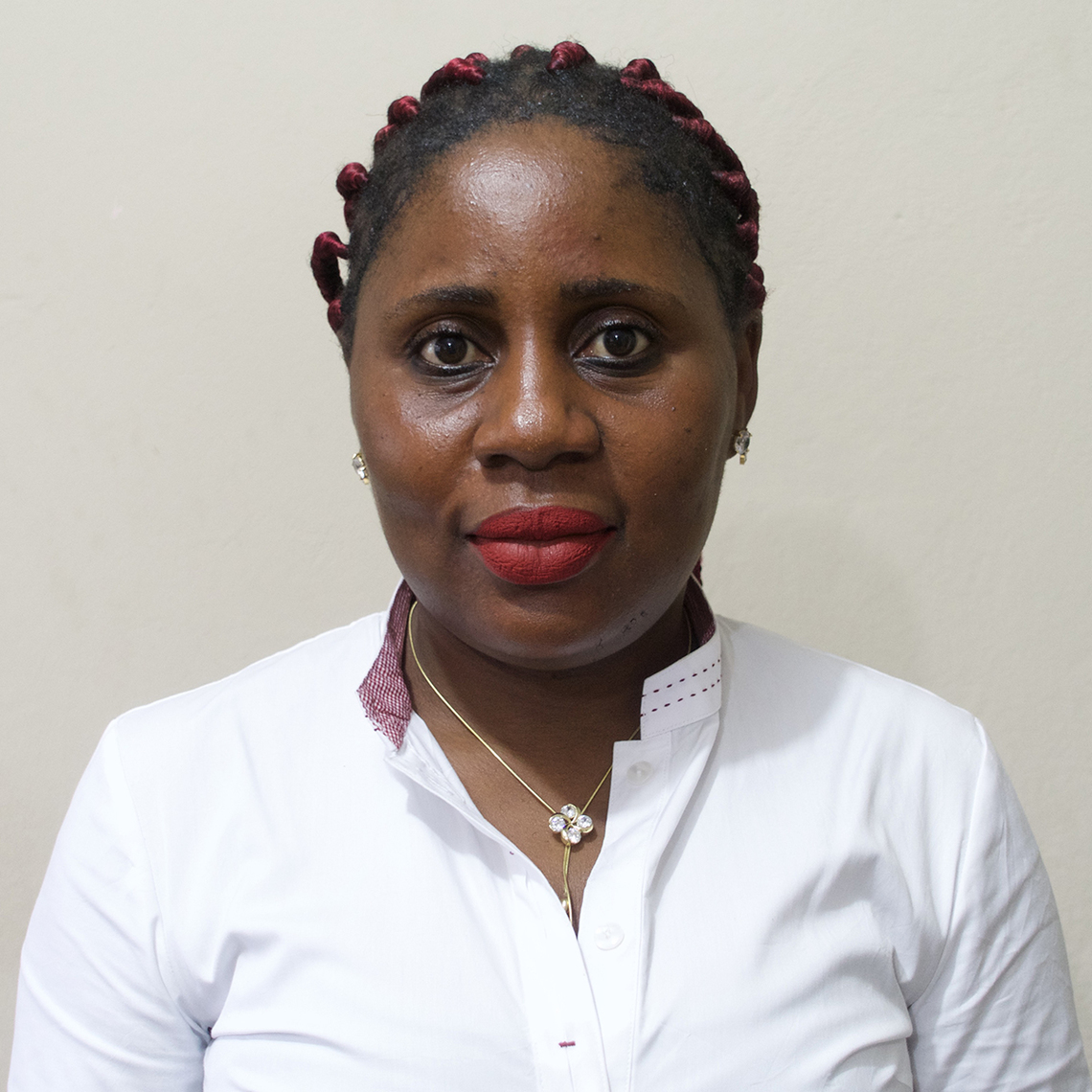
Matilda W. Doe is a registered nurse who works in the emergency department at Redemption Hospital in Monrovia, Liberia. At the height of the Ebola epidemic, she worked in a Red Cross Ebola treatment unit. She provided direct care to Ebola patients needing treatment throughout the epidemic.
Q: Why did you become a nurse? What made you want to become a nurse growing up?
MWD: I chose to be a nurse to help save lives.
Q: How did you learn what kind of treatment Ebola required?
MWD: We were not trained at the time. When Ebola came abruptly like that, we just went on the frontline and risked our lives. We didn’t know how to prepare ourselves yet. After several months, people came to train us on how to wash our hands, wear the gloves, sanitize our hands and wear full PPE [personal protective equipment], but by then we had already risked our lives.
Q: Was there a team of nurses and doctors? Who was on your team?
MWD: At work, we’d set up a team. The nurses were supposed to establish an IV. Someone is supposed to be there disinfecting. Someone else is supposed to be there feeding the patient. Yet another is there to console the patient, tell the patient “You will get well, you will be better, do not worry, we’ve got people constantly giving treatment.” We were there establishing the IV line, making sure patients got their full medication. Making sure patients take food to build up the immune system. We worked as a team.
Q: What happened when a patient died? Was there a way to say goodbye?
MWD: When the patient dies, you don’t call in family and say “Come for your body,” because if you do, you don’t know how they are going to go about burying. The burial team would collect the body and then go bury it. Before collecting the body, you would call the family and tell them the patient had been in the ETU [Ebola Treatment Unit] and had expired. We could not give them the body because that could expose a lot of people.
Q: Can you talk about how you got support every day to do what you did?
MWD: We were doing this work for our relatives, our friends, our sisters, our brothers, because just for the salary, we would not work. I’m not risking my life, leaving my children, my husband, I was not doing that for pay, I was doing that for the sake of my people.
Q: Can you talk about the importance of being trained in, in protective equipment?
MWD: We need to be trained. We need to be better trained as nurses, so that when there is an outbreak, we know how to engage that. We actually need to be trained in and out of Liberia. With our work in the ETU, we need to work out of this country to be well-trained.
Q: Do you see that the—the things that nurses learned in terms of training for Ebola practices are still being maintained in the hospital?
MWD: Yes. We learned how to wear our gloves, we learned how to wear our full PPE, and we learned how—for each patient that we treat, between patients, we learned to change gloves. It was in ’14, our equipment that we work with, we learned where to place it, because you can finish giving somebody medication, and they touch everything around you. We learned how to monitor our IPC [Infection Prevention and Control]. It is what we learned doing the training during Ebola. We tried to implement the practices, but we really needed more training.
Q: Do you feel that the remarkable work you did every day, do you and your fellow nurses feel you were recognized?
MWD: Yes. But still with all our efforts—you know, we risked our lives—we don’t hear anybody say, “Oh, Matilda, because of your work, because of your effort, because you risked your life, we want you to go out there to gain more knowledge.” And there’s no recognition, no encouragement, no recommendation, no I love you.
Q: Do you think there’s a connection between what you are able to do as a nurse and the fact that you are a woman? Is there a relationship between how you grew up as a young girl and your view of women’s responsibilities? And that you are now a nurse leader?
MWD: Well, when I was growing up, if I understand your questions, I thought before I can become a woman, before I can become somebody in the field, I have to go to school to learn and put myself in a category where people will recognize me. Where I will work in the community to save my family, my friends, my neighborhood, then I have to go to school, to be on the frontline.
Q: Who gave you that?
MWD: Courage.
Q: That direction?
MWD: I just thought to myself. I knew that coming from a very poor background, I’ve got to do something that will help my family, my brothers and sisters. I had to do something to help them, and even to help my community as well.
Q: Amazing. Is there anything else you want to say about your experiences as a nurse on the frontline during Ebola?
MWD: During my experience of God, I really learned a lot of things—how to protect myself, how to prevent myself from coming in contact with a lot of diseases. I really learned plenty of things, how to protect myself, so I wouldn’t die because of the infections. If I got a case or any outbreak, I know how to go about protecting myself first before saving life.
Matilda W. Doe was interviewed for Frontline Nurses by Jennifer Dohrn on August 16, 2019 in Monrovia, Liberia.