Frontline Nurses: Ebola
Fatmata Kargbo
Matron, Ola During Children's Hospital
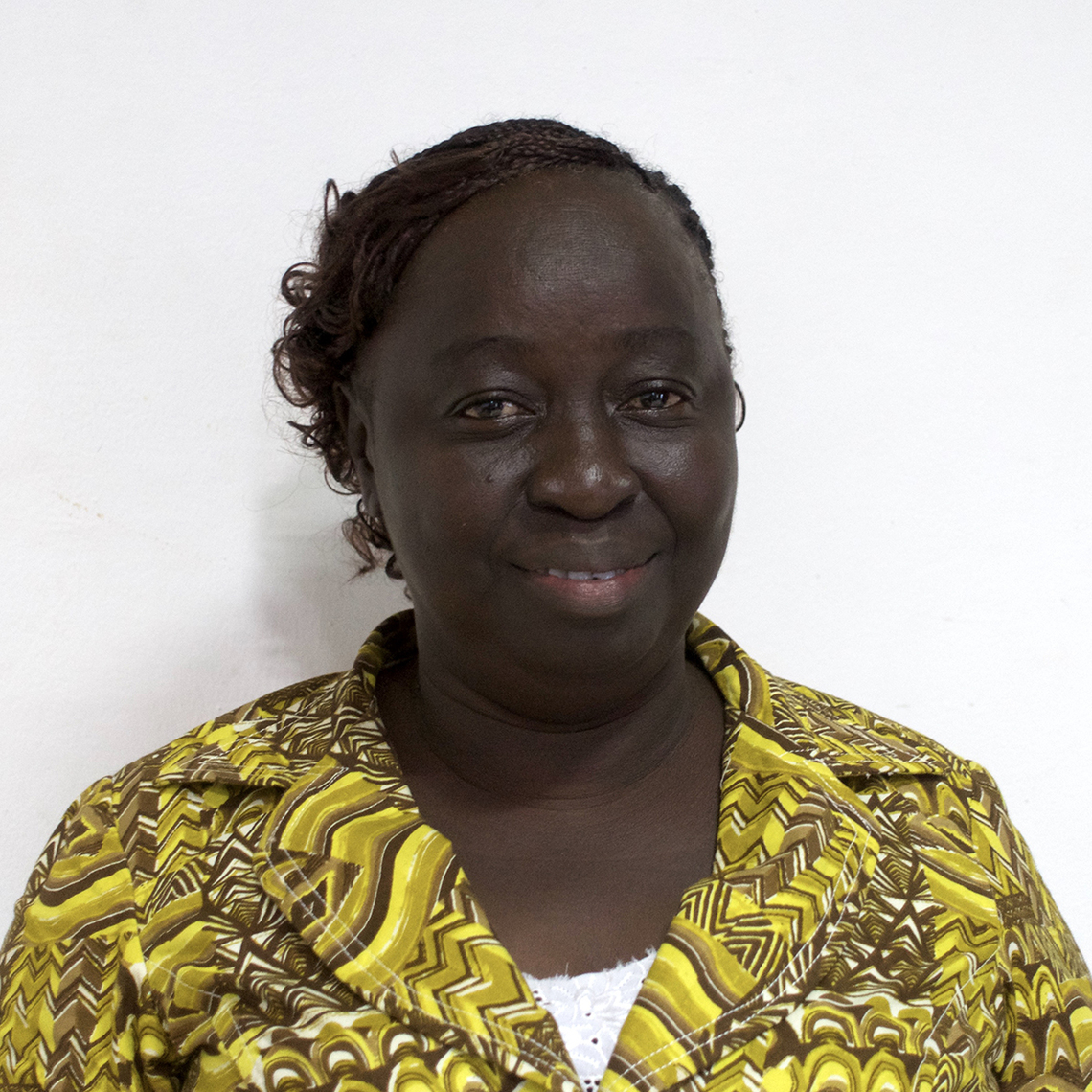
Fatmata Kargbo, BSc is a nurse midwife. Kargbo served as a staff nurse at Connaught Hospital before being promoted to acting matron. Kargbo currently works at Ola During Children's Hospital as a matron.
Q: What led you into this field, into doing nursing and midwifery?
FK: I had passion for human beings in general, coupled up with the way the nurses carried themselves. While in school, I went to the hospital one day and saw a staff nurse in an immaculate white uniform with a red belt, and that made me want to belong to this profession.
Q: Tell me a little bit about your family.
FK: I’m from a polygamous family—my mother, with two other mates. To my father, I’m the eldest of five. Then, from the other mothers, they have five—six and two. So with that, being the eldest, I always try to be a model to the rest of the younger ones. I’m trying to bring them up, as well.
Q: When did you hear first about Ebola?
FK: In 2014, I was at Connaught—during the peak of Ebola, around about August. By then, every morning, you woke up, you think of going to the hospital. The doom when you reached Connaught—people were dying. Each and every one is afraid of touching each other. That psychological effect, even on caregivers—I knew by then—I, as an assistant matron, when we are working, trying to convince the nurses, trying to talk to them, undergoing trainings—because by then, IPC [infection prevention and control] was not that effective. So having to undergo trainings, coping with the work, was really not easy.
Q: Tell me more, a bit more, about that—coping with the care of the patients. What resources did you have?
FK: Space was a big problem, considering the bed capacity at Connaught. Then the wards, we had isolation wards. The rate at which these Ebola cases were being brought into the hospital was alarming. The outpatient department was emptied. All other patients were transferred to the wards and it was closed and made temporarily for receiving Ebola patients. Getting people—the hygienists, the porters—to comply, in terms of patient private property when these patients are being brought in, was a challenge. Because they never knew the reality of it. Some will say, “I’ll just put it into the Klo [bathroom].” We had to be teaching them, as well.
Then, in terms of the relatives, again, when the patients are being brought, to get them set, settled down, was another problem. The use of the PPEs [personal protective equipment] after the training helped greatly. We had nurses now volunteering to go in—because it wasn’t easy even to get people to walk into the center, until the introduction of the incentive. Then people started opting to go in.
Q: What motivated you to continue? You are telling me that others were so scared about being close to the patients, and—
FK: Well, as a country—as a patriot—we had to save people’s lives. We had to guide people. After undergoing the training you knew what to do—and I think I was ready to go serve. So I went, being the head of the team. At the Aspen center, we worked alongside other foreigners who were doctors, various disciplines in health.
Q: How did it feel to work among the different experts, the doctors, and you as a woman? Was it comfortable? How did you manage with that?
FK: Well, I was comfortable—at least having even the chance to work with other nationals. They copied from us; we copied from them, as well. It was so educational. Some of the skills we copied, we adapted. When I became matron, I started introducing them, too, at the hospital where I work—the use of the whiteboard for allocation.
Q: Can you explain a bit more about the outcomes of the patients?
FK: There was a time I even asked, I said, “Even with this care and honor, that these people keep on dying, then what is the essence for this thing?” The containment merely was to prevent the further infection of the general populace. Throughout, none of the workers, both the hygienists and the medical team and the nursing team—none got infected. We worked successfully.
Q: What stood out in terms of your contact with the families? How did you manage to break the news, to inform them, to interact with them about this disease?
FK: It wasn’t easy—that aspect. Because no sooner a patient has been admitted, we hardly have contact with the relations out there. You come to work—maybe at the registration department, there was some form of communication with the relatives, but hardly, because the sooner you come to work, you are busy getting set to go in, because we go in by schedule. Then, if you are to go in to go feed them, change them, another set will be sent to go in, to go feed them when food is available.
And in terms of food, also, there was something I observed. For the workers and the patients—the same food was being prepared. Hopeless patients by then—how can they eat big, fat chicken legs, these other sorts of food for people who aren’t sick? I raised a concern to the manager: Why not prepare plain soup, a liquid diet for these people? Because even the sight—when they see it, they feel tormented—not talking of the smell. So they started sending me to do this in the kitchen. I engaged them, told them it would be better to prepare separate food for these people, because all this that you are preparing is wasted. They don’t eat it. When we go later for cleaning, you take the bulk of the foils to the bins, so it’s a waste.
Q: Because of loss of appetite?
FK: Yes, they cannot eat. So the cooks started preparing plain soup instead of the normal food they were preparing. And when we went in with it, the patients—some of them–could take two, three spoons.
Q: What can you tell the world—what you’ve learned, both, working on Ebola—and things that you will never forget?
FK: Well, the experiences are many—especially, as I said earlier, the coordinated services, the proper communication, the pre-preparedness, even before you go into the unit. When, thirty minutes towards drug administration, you go sit with your partner, you go through the charts, you collect the medication, you plastic them, patient by patient, because when you go in you won’t write, you won’t do anything. Everything is labeled on the plastic tag for the patient, what the patient is to take, so it’s just for you to take the plastic, then you hand over to the patient to see that—you encourage the patient to take it. Even on night duty, there’s not as much that seniority as we have among our own culture, in our settings. Because you had a boss, you won’t do this, you won’t do that. No. We all go in together with the doctors, those that are nurses. We work. You won’t know who’s a doctor, who’s a nurse. That cooperative effort was there, and it worked effectively.
Fatmata Kargbo was interviewed for Frontline Nurses by Annette Mwansa Nkowane on August 12, 2019 in Freetown, Sierra Leone.